
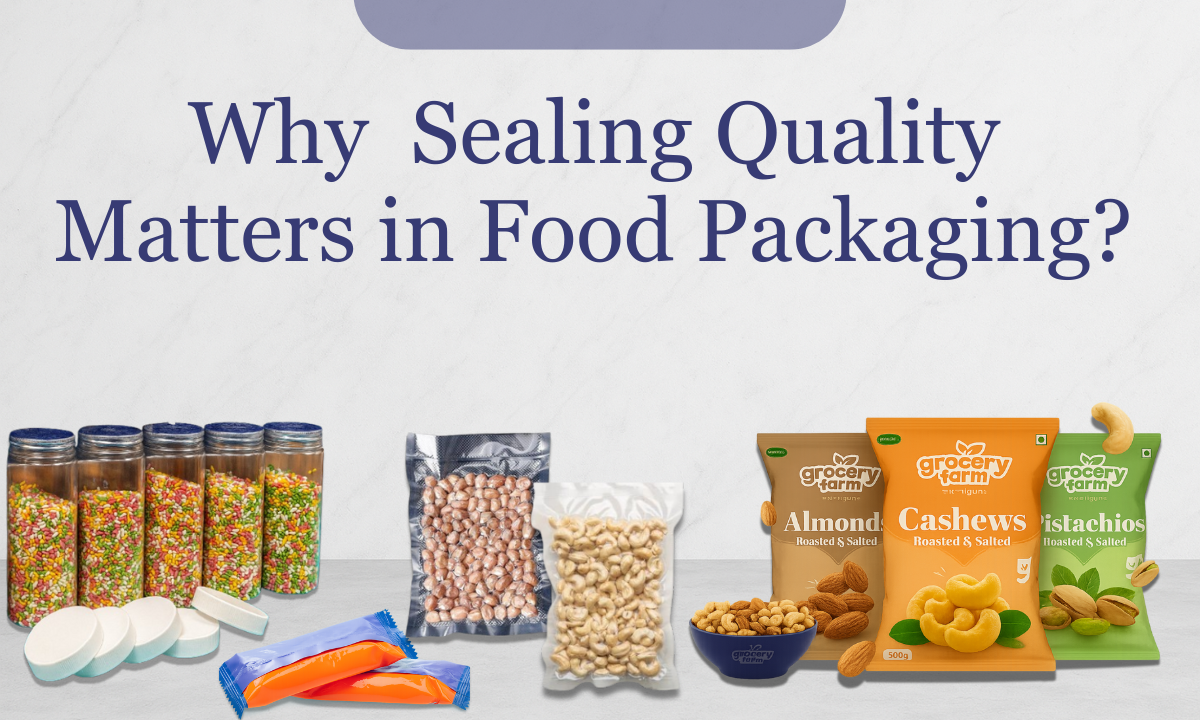
The success of a product in the food packaging industry is largely dependent on the quality of the seal. Whether it's processed foods, snacks, or ready-to-eat meals, sealing quality guarantees that the product is delivered to consumers in a fresh, safe, and attractive.
Let's explore why it's so important to maintain sealing quality and how it affects both customers and businesses.
1. Protects Product Freshness and Shelf Life
A flawless seal keeps contaminants, moisture, and air out of the package. A minor mistake might cause bacterial growth or oxidation, which shortens shelf life and compromises texture or flavour. From manufacture to consumption, freshness is preserved through sealing, which serves as a protective barrier.
2. Ensures Food Safety and Hygiene
Safety is a must in the food business. Improper seals put food at risk of spoiling or contamination by letting harmful bacteria in. By ensuring that every shipment satisfies strict hygiene requirements, sealing helps keep customers safe and confident in your business.
3. Prevents Leakage and Product Wastage
Imagine a pouch of chips or sauce spilling while being transported. Not only is this messy, but it leads to in product loss and dissatisfied customers. Such risks can be prevented by trustworthy sealing, which guarantees that every pack remains undamaged and leak-free from the production queue to retail shelves.
4. Enhances Brand Reputation
A perfect seal may not always be noticed by customers, but an imperfect one is immediately apparent. Weak seals might give the impression that the product is unreliable or of poor quality. Maintaining uniform sealing standards indicates professionalism, quality assurance, and focus to client satisfaction—all of which help promote the development of brand loyalty and trust.
5. Improves Efficiency in Production
Inconsistent sealing frequently leads to material waste, machine downtime, and rework. Manufacturers may ensure a steady process with fewer rejects and increased productivity by implementing advanced sealing technologies and monitoring systems.
6. Supports Sustainable Packaging Goals
Proper sealing directly contributes to sustainability by reducing the number of broken or wasted packs. By avoiding food waste and the requirement for additional packaging materials, it combines your operations with environmentally friendly practices.
Conclusion
Sealing quality is not only a technical need but also a competitive advantage in today's competitive food industry. It's a strategic benefit. It protects your product, maintains the reputation of your business, and delivers a reliable experience to every customer.
Investing in the appropriate sealing technology and quality checks ensures that your products stand out for the right reasons—freshness, safety, and reliability whether you're packaging liquids, frozen foods, or dry snacks.